
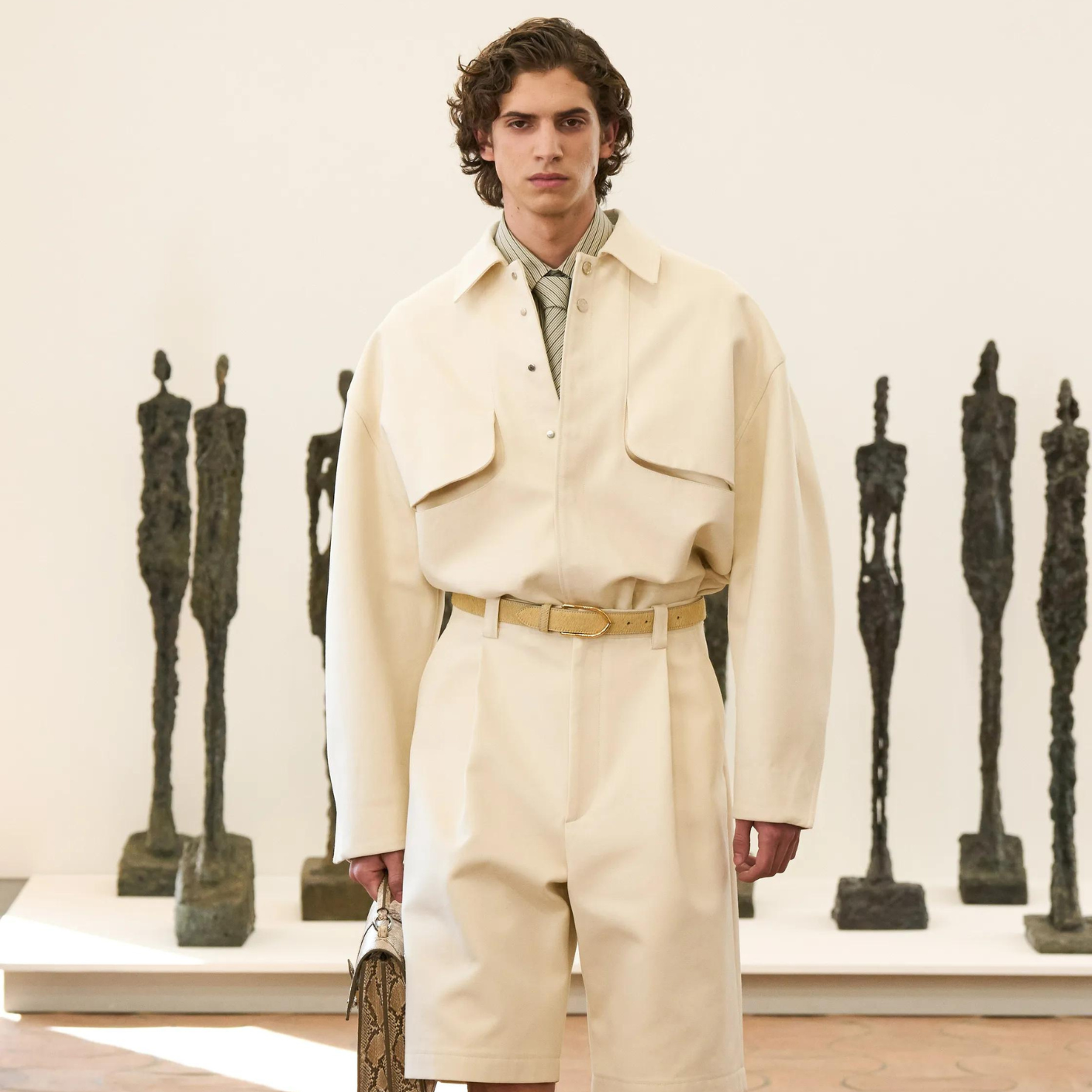




best designer bags 2026

1. Why 2026 Is a Decisive Year for Luxury Bags
The global luxury accessories market went through a significant realignment between 2023 and 2025, and 2026 is shaping up to be the year in which maison reap the rewards — or pay the price — for the creative and commercial choices made in the post-pandemic period. According to Bain & Company estimates for the personal luxury goods market, designer bags continue to be the category with the highest desirability index among high-end consumers, even surpassing jewellery and watches at the entry level of luxury.
Three macro-trends are redefining the landscape in 2026. The first is the return to visible craftsmanship: consumers — increasingly informed and selective — look for workmanship that is recognisable at a glance, telling the story of a atelier and justifying the price with tangible evidence. The second is material sustainability, no longer seen as an added value but as a minimum requirement: major maison are investing in LWG (Leather Working Group) certified tanneries and in supply chain traceability processes. The third is structured minimalism, a reaction to the logo saturation of 2018-2022: clean silhouettes, restrained hardware, muted colours or pure black.
Adding to all this is the growing role of the resale market as a barometer of real desirability. Platforms such as Vestiaire Collective, The RealReal and Chrono24 — which has expanded its offering to fashion accessories — now provide valuable data on which models retain or increase their value over time. For the informed reader, this information is an integral part of the purchasing decision.
How to read this guide: the Wanan Luxury editorial team selected three brands — Bottega Veneta, Saint Laurent, Givenchy — based on their editorial relevance in 2026 and the strength of their leather goods offering. For each brand, we analyse the aesthetic DNA, the key models and their positioning on the primary and secondary markets. The guide is designed both for those approaching the world of the best designer bags 2026 for the first time, and for the established collector seeking confirmation or new inspiration.
2. The Brands to Know: Bottega Veneta, Saint Laurent and Givenchy Under the Lens
Before analysing individual models, it is essential to understand the creative and production context of each maison. A luxury bag is not an anonymous object: it is the point of synthesis between an aesthetic vision, a craft tradition and a commercial positioning. Knowing these elements allows you to evaluate every purchase with more solid tools than surface aesthetics alone can offer.
2.1 Bottega Veneta: Craftsmanship as a Manifesto
Founded in Vicenza in 1966, Bottega Veneta began as a atelier specialising in leather working for other maison. Its entry into the consumer market came almost out of necessity: when demand for finished products exceeded that for semi-finished ones, the house decided to launch its own line. The brand we know today carries in its DNA that Venetian craft culture which for decades fuelled the world's most important luxury houses.
The intreccio — the woven leather strip technique that characterises almost every product category from the maison — was patented in the 1970s and remains the brand's unmistakable signature to this day. Not a printed logo, not a monogram: a technique, as recognisable as a family crest, requiring hours of manual work by internally trained artisans for every single piece.
The arrival of Matthieu Blazy as creative director in 2021 (succeeding Daniel Lee, who had in turn brought the brand back into the spotlight after years of relative quiet) marked a chapter of evolved continuity: Blazy preserved the obsession with material quality — indeed introducing a further layer of experimentation with materials, with leather printed to imitate denim or t-shirts — without abandoning the philosophy of discreet luxury that makes Bottega Veneta unrecognisable to the uninitiated and instantly identifiable to anyone who truly knows fashion.
In 2026, Bottega Veneta consolidates its position as the quintessential symbol of quiet luxury: a proposition that doesn't need to shout its price to communicate exclusivity. It is the ideal brand for anyone seeking a bag that ages gracefully, appreciates over time and never risks looking dated.
2.2 Saint Laurent: Power, Structure and Parisian Seduction
The story of Saint Laurent is inseparable from that of Yves Henri Donat Mathieu-Saint-Laurent, the couturier who in 1966 — coincidentally also the founding year of Bottega Veneta — opened the first Rive Gauche boutique, democratising luxury prêt-à-porter without sacrificing haute couture elegance. The brand went through decades of transformation, passing through the Tom Ford era (which redefined its sensuality in the 1990s) and that of Hedi Slimane (who temporarily changed the name to "Saint Laurent Paris" and radicalised the rock-chic aesthetic), before arriving at the current direction of Anthony Vaccarello, in charge since 2016.
Vaccarello has given the maison back a powerful visual coherence: his collections express an aesthetic of structured seduction, with references to 1970s Paris, women's tuxedos, tailored silhouettes and a systematic use of gold-tone hardware as an identity element. The YSL bags are built around this logic: precise geometries, dramatic closures, proportions studied to the millimetre.
The positioning of Saint Laurent in 2026 is that of a maison that perfectly balances heritage and contemporaneity: authoritative enough not to have to chase trends, alive enough to set them. Its bags speak to a buyer who uses fashion as a tool for precise identity communication — not ostentation, but affirmation.
2.3 Givenchy: Architectural Elegance and a New Identity
Hubert de Givenchy founded his maison in Paris in 1952, and over the following decades built an identity based on sober elegance and the aristocracy of cut. His bond with Audrey Hepburn — whose private and on-screen wardrobe he dressed for thirty years — remains one of the most cited anecdotes in fashion history, but it risks overshadowing the complexity of a maison that, under various directions, has reinvented itself several times.
The era of Matthew M. Williams, which began in 2020, brought Givenchy towards a bolder, more structural aesthetic: visible chain hardware, three-dimensional constructions, references to architecture and luxury streetwear culture. The leather goods department has benefited from this approach: models such as the Antigona — originally launched in 2011 — have been reworked with new proportions and new materials, while entirely new models such as the Voyou have built their own desirability narrative in a short space of time.
In 2026, Givenchy speaks to a buyer looking for a bag with a strong visual identity, capable of being a statement piece without falling into excess. It is the right brand for those who want to stand out with aesthetic intelligence, valuing structure over logo.
3. The Best Designer Bags 2026: Iconic Models and New Releases
The selection below represents the editorial core of this guide. Each model has been evaluated based on versatility, documented build quality, relevance within the best designer bags 2026 landscape, and secondary market prospects. This is not an absolute ranking, but a reasoned map to help navigate an offering that — considering just these three brands — counts hundreds of active references.

3.1 Bottega Veneta: Models Not to Miss in 2026
Andiamo is the structured it-bag that Matthieu Blazy introduced as an answer to the demand for a work bag that wouldn't sacrifice Bottega's identity. The bag is built in intrecciato vitello with a rigid internal frame that gives it a defined trapezoidal shape, roomy enough to hold a 13-inch laptop. In 2026 it is offered in an expanded palette that includes Fondant — a warm beige, already a protagonist in previous seasons — matte Black and a new Parakeet (bright green) set to become the season's statement colour. The European retail price starts at 3,900 euros for the standard version in intrecciato vitello. Its versatility makes it suitable for both professional and structured-casual contexts.
Kalimero is an exercise in the opposite style: a bucket bag with generous proportions, built in extremely soft nappa with a looser weave than the classic intreccio. The volume appears almost inflated, in contrast with the bag's actual lightness. It is the model that best embodies Bottega Veneta's ability to play with material paradox: a bag that looks heavy due to its structure but proves surprisingly light to carry. In 2026 the metallic leather variants — antique gold and oxidised silver — remain among the most sought after. Price range: from 4,200 euros.
Knot Clutch is the quintessential evening evergreen, a piece that Bottega Veneta relaunches every season with different materials while never altering the silhouette: a small rectangular box embellished with a central knot in gold- or silver-plated metal. The versions in karung (water snake leather with an extremely fine scale texture) and in jacquard satin are the most sought after for formal occasions. In 2026 the Knot also debuts in a jacquard fabric version inspired by traditional Venetian textiles. Priced from 1,500 euros, positioning it as the more accessible entry point within Bottega's leather goods.
3.2 Saint Laurent: Classics Reimagined and 2026 Debuts
Sac de Jour, launched in 2013 under the direction of Hedi Slimane, is the work bag that helped rewrite the concept of professional elegance in contemporary luxury. In 2026, Vaccarello introduces new proportions: a Nano version — ultra-compact, worn as a crossbody with a thin strap — and a revision of the Baby size with hardware in aged brass instead of polished gold-tone. The structure in box calf remains unchanged, as do the parallel saddle stitches that run the length of the bag, giving it an elegant rigidity. The Sac de Jour is probably the YSL model with the highest retention value: pre-owned pieces in excellent condition regularly sell for between 70% and 90% of the original price. Retail price from 2,100 euros (Baby version).
Lou Camera Bag is the crossbody that has dominated street style over the past three years and, in 2026, shows no sign of losing desirability. Its rectangular shape with overlapping flap, the golden chain strap interwoven with leather, and the logo YSL applied in metal on the front are elements that make it instantly recognisable. The version in matelassé lambskin — with its signature diamond quilting — is the most iconic. In 2026 Powder Pink and Emerald Green join the classic Black and Cream. Priced from 1,750 euros, making it one of the most interesting entry points into the luxury handbag market.
Le 5 à 7 is the envelope model — so named in reference to the quintessential Parisian hour, from 5 to 7pm, traditionally reserved for romantic rendezvous — which Vaccarello has transformed into a contemporary silhouette with great character. The envelope closure with a long flap, the removable thin chain and its surprising capacity make it a hybrid between a clutch and a mini shoulder bag. In 2026 it debuts in a curly velvet version for the autumn-winter season, set to become the most photographed piece on the runways. Indicative price from 1,950 euros.
3.3 Givenchy: The Bags Defining the New Era
Voyou is the it-bag that Givenchy launched in the 2023/2024 season and which, in 2026, definitively consolidates its status among the elite of contemporary designer bags. The name evokes the French term for "rascal, rebel" — and the bag carries this identity in its structure: a soft, asymmetrical silhouette, with a front knot that serves as both decorative and functional closure. Available in three sizes (Small, Medium, Large), it is built in natural cowhide leather with a lightly satin finish. In 2026 it is offered in a rich palette that includes Tabac, Ivory and a deep Midnight Blue. The Medium Voyou in smooth black leather is already considered a future classic: secondary market prices sit close to retail, a sign of strong sustained demand. Priced from 2,350 euros.
Antigona Soft is the slouchy reinterpretation of a geometric icon that Givenchy introduced in 2011. The original Antigona was characterised by rigid, precise lines; the Soft version, presented in 2020 and consolidated in subsequent collections, softens that structure with a more supple, worked leather that lets the bag "sit" naturally on the hip. In 2026 the Mini version — carried by hand with the short handle or over the shoulder with the additional strap — is among the most sought after. The grained leather construction (leather with a naturally embossed grain) offers greater resistance to everyday wear than smooth nappa. Priced from 1,890 euros.
Cut-Out Bag is the most architectural proposition in the current Givenchy collection and the boldest piece in this selection. The bag stands out for the geometric cut-outs in the leather that create a three-dimensional perforated effect, playing with solids and voids that directly echo the language of industrial design. It is not a bag for everyone: it requires an already structured wardrobe and a precise aesthetic awareness. For those who choose it, however, it becomes a collector's piece with intrinsic rarity. Priced from 2,800 euros, limited availability per season.
4. Materials, Quality and Savoir-Faire: How to Recognise an Authentic Designer Bag
One of the most valuable skills a luxury fashion enthusiast can develop is the ability to read a bag through its materials and construction. This is not about snobbery, but about literacy: understanding what you hold in your hands allows you to properly evaluate a price, spot even a sophisticated replica, and take proper care of your purchase.

Glossary of key materials
The term nappa refers to chrome-tanned cow or lambskin leather with a very soft finish and smooth surface. It is the most common material in mid- to high-end luxury bags: its aesthetic result is excellent, but it requires care against rubbing and moisture. vitello (calf leather) is leather from a young bovine, more resistant than nappa with a finer grain: it is the base material of the Bottega Veneta intreccio and of Saint Laurent's box calf. box calf is a specific treatment of vitello, tanned to achieve an almost mirror-like surface and a characteristic rigidity: it is the material of the Sac de Jour and of Hermès's historic Kelly. Karung is Asian water snake leather, with a texture of small, regular, dense scales: it is exotic, regulated by the CITES Convention and instantly recognisable. Lambskin (lambskin or agneau) is the softest and finest-grained: it is used for the matelassé quilting of Chanel and Saint Laurent, but is also the most delicate.
How to recognise authentic Bottega Veneta intreccio
The original intreccio is made of leather strips (whose thickness varies by collection) woven by hand or semi-manually over an internal frame. The points to observe are: the regularity of the weave — each square must be identical in size across the entire surface; the sharpness of the edges of the strips, which on an authentic piece appear finished, not frayed; the back of the bag, where the strips meet the interior lining and where finishing quality is often telling; and finally the weight of the bag, which on an authentic Bottega piece is always significant due to the layers of leather used.
Hardware and logo: how to read the differences
Major maison specify their hardware standards with almost engineering-level precision. On Bottega Veneta the hardware is reduced to a minimum — the brand's philosophy holds that the leather should "speak for itself" — and when present it is gold- or silver-plated with a guaranteed minimum thickness. On Saint Laurent the applied metal logo YSL must have clean, not rounded or blurred, edges: replicas tend to have a slightly heavier logo with irregular thickness. On Givenchy the metal chains have a recognisable specific weight: every single link must have the same size and finish as the others; an authentic chain produces a full, uniform sound when moved, while a chain made of mixed materials produces a hollower, less consistent sound.
Certificates, dust bags and packaging
An authentic luxury purchase must always include: the original dust bag (in flannel or cotton with an embroidered or printed logo), the brand's original box (only some maison provide this systematically), the tag with the price and model code, and — for brands that issue them — a certificate of authenticity or a care card. Bottega Veneta always includes a heavy paper booklet with care instructions. Saint Laurent includes a warranty card with a traceable serial number. Givenchy provides a cotton pouch with an embroidered logo. The presence of these elements does not by itself guarantee authenticity — the most sophisticated replicas reproduce them — but their absence is an unmistakable warning sign.
5. Resale Value and Investment: Which Bag Is Worth the Most in 2026
The conversation about the luxury bag as an investment asset has gained growing credibility over the past decade. A 2024 Knight Frank report ranks designer bags among the tangible asset classes with the best long-term performance, surpassing vintage cars and fine wine in terms of liquidity and accessibility. Naturally, not all bags perform the same way: the secondary market rewards specific models, specific colours and specific conditions.
The models with the highest retention value for each brand
For Bottega Veneta, the models with the highest retention value are those from the Cassette line (launched under Daniel Lee) and the Andiamo, which in its first two years on the market has shown resale prices consistently close to retail. The Pouch — the extremely soft clutch that went viral in 2019 — retains high values for pieces in black nappa or rarer colourways. For Saint Laurent, the Sac de Jour in black box calf (Medium size) is historically the piece with the highest retention rate: it rarely falls below 75% of retail price even with visible signs of wear. The Lou Camera Bag sits between 60% and 70%. For Givenchy, the Antigona in black grained leather — the original version, not Soft — retains solid secondary market value, while the Voyou is still building its market reputation, with prices that vary considerably depending on size and colour.
Colours and variants that hold up best over time
The general rule of the secondary market is simple: black is always the colour with the most stable and broadest demand. Next comes cognac/camel for grained and structured leathers, and beige/ivory for soft bags. Statement colours — bright green, orange, red — reach very high prices immediately after launch (when demand outstrips supply) and then decline more rapidly over time. The exception is colours that have become the brand's "iconic archive": the Hermès Orange, the Valentino Pink, the Lee-era Bottega Cobalt Blue are examples of colourways that have turned their rarity into a value multiplier.
Limited edition vs. permanent collection
Contrary to common intuition, limited edition are not always the best investments. Permanent collection pieces with high demand and limited production — such as Bottega Veneta's Knot Clutch in karung or Saint Laurent's Sac de Jour Baby size in black box calf — tend to hold their value more steadily, because demand is sustained over time and does not depend on launch-moment volatility. High-profile limited edition — capsule collection, collaborations, runway pieces — can triple in value within a few months, but the market risk is proportionally higher.
How to store a designer bag to preserve its value
Storage instructions are simple but often ignored: keep the bag in its own dust bag, stuffed with tissue paper (never with the box, which creates asymmetric pressure), stored upright or on a flat shelf, away from direct light, heat sources and moisture. Light-coloured leathers should be treated with a specific conditioner every six months. hardware should be protected from drops and friction with other metals. Every valuable bag should be insured: the insurance market for luxury jewellery and accessories is now accessible and offers specific coverage for accidental damage and theft.
6. How to Choose the Right Designer Bag for You: the Editorial Checklist
Having explored brands, models, materials and the secondary market, it's time to return to the fundamental question: which bag is right for you? The answer depends on variables no guide can replace — your lifestyle, your wardrobe, your real budget, your expectations — but a structured checklist can help clarify priorities and avoid the most common regrets.
- Define your real budget, including hidden costs. The purchase price isn't the only cost to consider. Add: any insurance (roughly 0.5-1% of value per year), professional maintenance (cleaning and conditioning every 12-18 months, from 80 to 200 euros per piece), storage costs if you plan to buy multiple pieces, and any resale platform fees (which retain commissions between 15% and 35% of the sale price).
- Everyday use or special occasion? For everyday use: choose resistant leathers such as grained vitello or box calf, brass hardware (more scratch-resistant than fine plating), sturdy closures and proportions that suit your real lifestyle (how much do you actually carry with you each day?). For special occasions: you can opt for finer, more delicate materials such as nappa, karung or satin, smaller proportions and more visually striking pieces such as the Knot Clutch or the Le 5 à 7.
- Analyse your existing wardrobe. If your wardrobe is predominantly in neutral tones — grey, navy, camel, white — a black bag or a statement-colour bag are both valid choices: the former for absolute versatility, the latter for the value of contrast. If your wardrobe is already rich in colour and pattern, a bag in natural or black leather is probably the wiser choice. If you love minimalism, Bottega Veneta is the brand most consistent with that philosophy.
- First designer bag or an addition to a collection? For a first bag: favour the permanent collection, neutral colours, medium sizes and models with high recognisability and good retention value. This is not the moment for bets on new models or unusual colours. For those who already have a structured collection: it's the moment to consider limited edition, statement colours or more architectural models such as Givenchy's Cut-Out Bag — pieces that add narrative value to the collection.
- Where to buy safely. There are three options: the official boutique (absolute guarantee, but limited availability and no access to sold-out models), authorised e-commerce platforms such as Wanan Luxury (equivalent authenticity guarantee, access to models no longer available in boutiques, the convenience of remote purchasing with clear return policies), and certified resale (for discontinued models or rare colourways, always verify the seller's credentials and request all provenance documents). In any case, be wary of prices significantly below retail on unauthorised channels: there are no "discounts" on luxury bags outside official private sales.
"The right bag isn't the most expensive one, nor the most famous one: it's the one you know well enough to carry with confidence and care for properly." — Wanan Luxury Editorial Team
Frequently Asked Questions
What is the most iconic designer bag of 2026 worth investing in?
Among the best designer bags of 2026, three models stand out for recognisability and value-retention prospects: the Andiamo by Bottega Veneta is the ideal choice for those seeking a structured it-bag with strong craft identity and cross-appeal between luxury experts and newcomers. The Sac de Jour by Saint Laurent in black box calf remains the luxury work bag with the highest retention rate on the secondary market, stable between 75% and 90% of the original price even after years of use. The Voyou by Givenchy in Medium size is the youngest model in the selection, with a desirability trajectory on a steady upward path that suggests room for appreciation over the next 24-36 months. The choice among the three depends largely on buyer profile: discreet minimalist (Bottega), urban professional (Saint Laurent), design connoisseur with a strong personality (Givenchy).
Do Bottega Veneta, Saint Laurent and Givenchy bags increase in value over time?
It's important to distinguish between appreciation (a real increase in value above the original retail price) and retention value (maintaining a high percentage of the price paid). True appreciation — as seen with Hermès's Birkin model or pre-2019 Chanel models — applies only to a limited number of iconic pieces in rare colourways and impeccable condition. For the brands analysed in this guide, the realistic advantage is retention: Saint Laurent's Sac de Jour in black box calf (Medium size, excellent condition, with all accessories) regularly sells for between 80% and 90% of retail price on the secondary market even after 3-5 years. Bottega Veneta's Andiamo shows similar performance, with higher peaks for discontinued colourways. Givenchy's Voyou is still too recent for consolidated data, but sustained demand suggests retention between 65% and 75% in the medium term. The factors that most affect this: condition, completeness of original accessories (dust bag, box, tag), colour and size.
How can I tell an authentic luxury bag apart from a high-quality replica?
High-quality replicas — so-called "mirror replicas" — have reached a level of sophistication that makes visual authentication increasingly difficult even for experts. That said, there are indicators that replicas still cannot fully reproduce. For leather: authentic Bottega vitello or Saint Laurent's box calf have a specific feel to the touch — compact, uniform, with an elastic "bounce back" — that synthetic materials or lower-quality leathers don't faithfully replicate. For hardware: weight and sound are telling; authentic plated brass hardware is heavier and produces a full, not hollow, sound. For stitching: on an authentic piece, saddle stitches (saddle stitch) are perfectly parallel, with uniform tension throughout their length; every stitch must be equidistant from the edges. For documentation: check the internal serial number against brand databases or request verification through certified authentication services (Entrupy, Real Authentication, Authenticate First). At Wanan Luxury, every piece purchased is verified through a multi-level authentication process before being listed for sale.
What is the average price of a designer bag from these brands in 2026?
The price ranges updated for the first half of 2026 for the models analysed in this guide are as follows. Bottega Veneta: entry point with the Knot Clutch from around 1,500 euros; mid-range with Kalimero and Andiamo between 3,900 and 4,800 euros; top-tier for pieces in exotic materials (karung, CITES-certified python) above 6,000 euros. Saint Laurent: entry point with the Lou Camera Bag from around 1,750 euros; mid-range with Sac de Jour Baby and Le 5 à 7 between 2,100 and 2,400 euros; top-tier for versions in special materials or with sterling silver hardware above 4,000 euros. Givenchy: entry point with the Antigona Soft Mini from around 1,890 euros; mid-range with Voyou Medium and Antigona size Small between 2,350 and 2,900 euros; top-tier for the Cut-Out Bag and exotic leather versions above 3,500 euros. Note that maison apply retail price increases on average every 12-18 months, with increments between 5% and 15%: buying today is often equivalent to saving compared to next year.
Is it better to buy a luxury bag in a boutique or on an authorised e-commerce platform such as Wanan Luxury?
Both channels offer equivalent authenticity guarantees when dealing with retailers officially authorised by the brands. The choice depends on practical factors and personal preference. The physical boutique offers the sensory experience of shopping — being able to touch the leather, assess the real weight, try on the bag — and immediate access to the brand's specialised staff. The downside is availability: boutiques in major cities manage waiting lists for the most sought-after models and don't always have the desired colourways in stock. An authorised e-commerce platform such as Wanan Luxury, on the other hand, offers access to a wider catalogue, including models sold out in official boutiques, the ability to compare multiple options at once, clear and documented return policies, and customer service specialised in luxury fashion. For those who don't live near a brand's boutique, or are looking for specific variants no longer available through direct channels, authorised e-commerce is often the only viable route to a guaranteed, secure purchase.
Wanan Luxury curates and sells the products featured in this article. Editorial selection is independent from commercial considerations. Prices and availability are accurate at time of publication. Read about our editorial standards